
Examining the hidden costs of cheaper minerals.

A closer look at what happened when three dairies traded MIN-AD for a less-researched alternative.
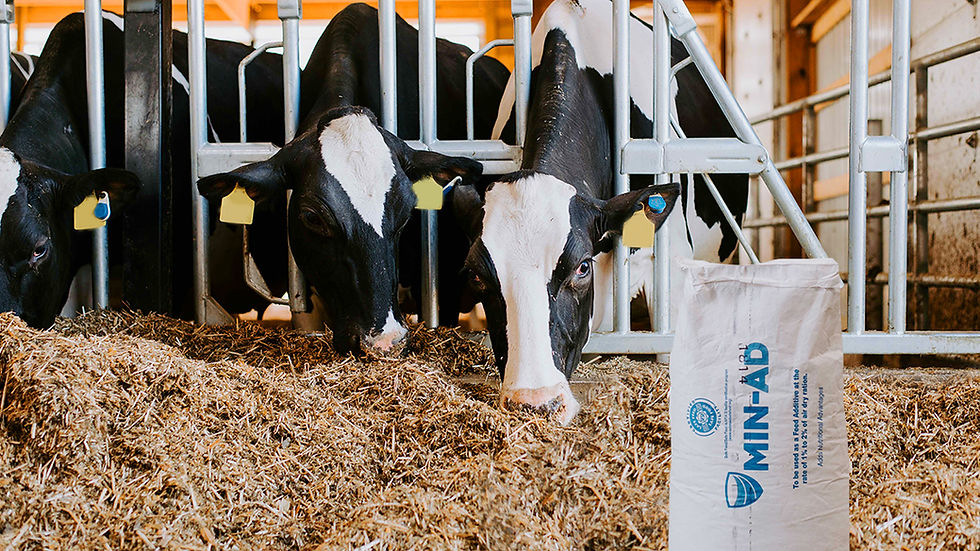
As dairy margins remain thin, producers, nutritionists and feed mills are all looking for ways to trim costs and maintain profitability. It can be tempting to look at cheaper, less-researched supplement alternatives. This is especially true for minerals or buffers, where there’s often not a lot of quantitative analysis to differentiate between options. But what can these decisions end up costing in the long run?
A recent case study sheds some light on the potential costs of using these alternatives. MIN-AD® is a calcium magnesium carbonate (CMC) backed by over 50 years of extensive research. Controlled research trials with MIN-AD have consistently demonstrated a 0.1 to 0.2 percentage point increase in milk fat. Over the spring and summer of 2025, three dairies switched from MIN-AD to a cheaper alternative with minimal data. After the switch, all three dairies observed negative results, before switching back to MIN-AD.
Reduced milk income
Milk components were significantly reduced on two of the three dairies, averaging almost 0.2 points less fat and 0.1 points less protein (Table 1). On these dairies, the loss of components resulted in an average reduction in milk income of $0.59 per cow per day.

Increased health costs
In addition to production changes, health was also affected. In each of the three herds, somatic cell count was as much as 60 units higher when the alternative product was fed. This increase in SCC may be one indicator that these cows experienced increased stress during that time.
Another indicator of increased stress and reduced health is the overall culling and death rates on the farms. For all three dairies, total culling rates were 5-10 units higher when the alternative product was fed. With current replacement cow prices, the cost to a dairy of losing or having to sell productive cows is substantial. Across these three farms, income was reduced by an average of $0.37 per cow per day, only taking into account the cost of a replacement animal and the value of a cull cow (Table 2).

The cost of saving
Ultimately, for these three farms, saving on feed cost with unproven substitutes actually cost money. It eroded an average of almost $1 of profit per cow per day ($0.40 to $1.83) before switching back on to MIN-AD. For a 500-cow dairy, that $1 reduction in daily profitability translates into over $180,000 of lost margin per year, turning a quick substitution into a much more impactful decision for the farm.
Is your dairy looking to trim costs without losing productivity? Papillon specializes in dairy feed additive and nutritional solutions that are backed by research. Reach out to your Papillon representative today and work with them to find a solution that fits your dairy’s goals.


Comments